

Quick Answer
Children adapt to new environments more easily with consistent routines, emotional support, and gradual transitions. Positive reinforcement and patience build confidence during periods of change. Most children adjust within a few weeks when given steady support from parents and teachers.
Why Children Struggle With New Environments
A new environment removes the predictability that a young child depends on. Familiar faces, sounds, and routines give children a sense of safety. When those things change, even a happy and confident child can feel unsettled for a while.
This struggle is not a flaw. It shows that the child has formed healthy attachments to people and routines already. Early childhood adjustment simply takes time, since children process change more slowly than adults do.
New classmates, new teachers, and new spaces all require a child to rebuild that sense of safety from scratch. Patience during this rebuilding stage makes a real difference.
Signs That Your Child Is Having Trouble Adjusting
Every child shows stress differently. Some signs are loud, while others are quiet and easy to miss at first.
- Crying or clinging more than usual at drop-off
- Trouble sleeping or changes in appetite
- Regression in skills like potty training or speech
- Increased irritability or sudden mood swings
- Reluctance to talk about the new place or new people
Separation anxiety often shows up strongly during this period. A child who was once easygoing may suddenly resist saying goodbye. This reaction usually fades as trust builds with new caregivers and surroundings.
How Can Parents Help Children Adjust to New Environments?
Preparation helps more than most parents expect.
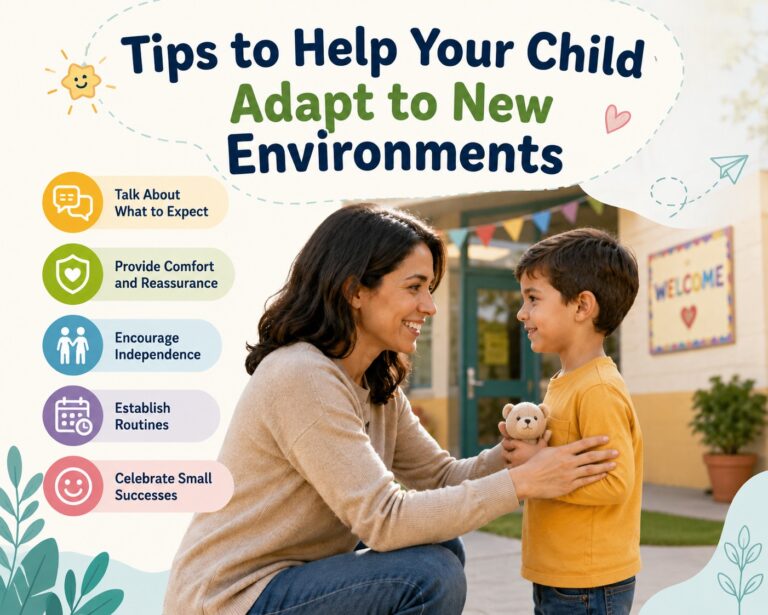
- Talk about the new place before the change happens.
- Describe what the day will look like in simple, honest terms.
- Practice short separations before a big transition, such as a new preschool start date. A few short visits or a quick tour can lower anxiety significantly.
- Bring along something familiar, too, like a small comfort object, since this provides a steady anchor in a new space.
- Keep goodbyes short and confident. Long, drawn-out goodbyes often increase a child’s anxiety rather than easing it. A quick hug, a clear goodbye, and a confident exit work better than a long, emotional departure.
The Importance of Routine and Consistency
Predictability is calming for young children. Familiar transition routines, like a consistent morning sequence or the same goodbye phrase, give children something steady to hold onto. Children thrive when they know what comes next, even in a brand new setting.
Try to keep other parts of life consistent during a big change. If a child is starting preschool transition at the same time as another big change, like a move, consider spacing those changes out if possible. Too much change at once can overwhelm even a resilient child.
How Do Preschool Teachers Help Children Adjust?
Experienced teachers are trained to notice small cues that signal stress. They use predictable classroom routines, warm greetings, and gentle redirection to help children settle into the day. A familiar daily rhythm at school helps children feel grounded fast.
Teachers also build child’s confidence through small wins, like learning a new classmate’s name or completing a simple task independently. These small successes add up quickly. Over time, children begin to see the new environment as safe rather than scary.
At West Hollywood Children’s Academy, our teachers work closely with families during the early weeks of enrollment. We use steady classroom routines and a warm, predictable atmosphere to ease the adjustment period. Families can learn more about our Parent and Me program, which offers a gentle introduction to our learning environment before full enrollment begins. You can also explore our daily structure.
When Should Parents Be Concerned?
Most adjustment struggles fade within a few weeks. However, some signs are worth a closer look.
If a child shows ongoing distress well beyond the typical adjustment period, or if regression in sleep, eating, or behavior continues without improvement, it may help to speak with a teacher or pediatrician.
Open communication with your child’s teacher is valuable here. Teachers see your child in a different setting and can often share whether the struggle is settling down or staying the same.
How Children Build Confidence During Times of Change
Confidence grows through repeated, small successes.
- Celebrate small wins, like a calm drop-off or a new friendship forming.
- Avoid comparing your child’s pace of adjustment to other children, since every child adapts on their own timeline.
- Stay patient and consistent, even when progress feels slow some days. Children pick up on parental stress, so a calm, confident parent often raises a calmer, more confident child.
This steady support, paired with a structured, supportive environment at school, builds resilience that lasts well beyond the first few weeks.
What Adjustment Looks Like in Real Life
A child may cry every morning at drop-off for the first two weeks of preschool, then suddenly start walking in happily on their own. This shift often happens once trust has been built with a teacher.
A toddler may refuse to talk about their new classroom at home, only to come alive describing it weeks later, once they feel settled. A child may cling tightly during a move to a new home, then slowly explore the new space once routines return to normal.
These patterns are common, and they almost always improve with time and steady support.
Helping Children Feel Comfortable in New Environments
Starting a new classroom can feel overwhelming for some children, which is why supportive transitions are an important part of the experience at West Hollywood Children’s Academy. Teachers work closely with families during the first weeks of enrollment to build trust, establish routines, and help children feel secure in their new surroundings.
Programs are designed to encourage independence while providing the consistency and emotional support children need during periods of change. Small class sizes, familiar routines, and strong teacher relationships help children gradually build confidence.
Families can learn more about our Parent and Me Program, explore our complete program offerings, or contact our team through the admissions page to learn more about enrollment.
Key Takeaways
- Children need time, patience, and consistent routines to adjust to new environments.
- Separation anxiety often improves once trust builds with new caregivers.
- Short practice separations before a big change can ease anxiety.
- Preschool teachers play a key role in helping children settle in.
- Most adjustment struggles fade naturally within a few weeks.
Frequently Asked Questions
How long does it usually take children to adjust to a new environment?
Most children adjust within a few weeks once routines, faces, and surroundings become familiar. Some children settle faster, while others need more time and patience. Consistency at home and school both help speed up this process.
What are common signs of separation anxiety in young children?
Common signs include crying at drop-off, clinging to a parent, trouble sleeping, and reluctance to leave a parent’s side. These signs usually fade as trust builds with new caregivers and the environment becomes familiar. Separation anxiety is a normal stage, not a lasting problem.
How can I help my child adjust to starting preschool?
Talk about preschool before it starts, practice short separations in advance, and keep drop-off goodbyes short and confident. Bringing a small comfort item can also ease the transition. Working closely with preschool transition support from teachers makes a meaningful difference too.
